
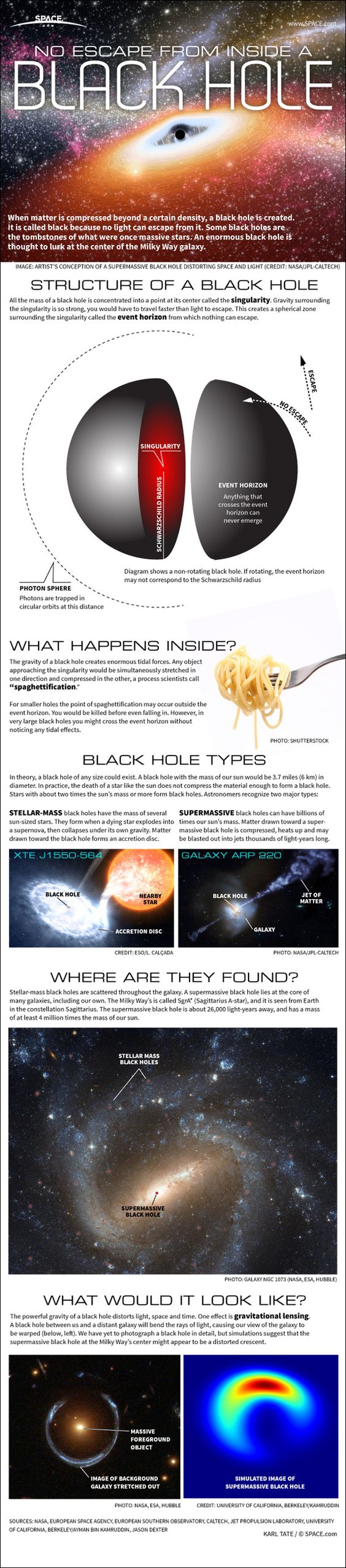
No Escape: Dive Into a Black Hole (Infographic) by Karl Tate - When matter is compressed beyond a certain density,

 a black hole is created. It is called black because no light can escape from it. Some black holes are the tombstones

 of what were once massive stars. An enormous black hole is thought to lurk at the center of the Milky Way galaxy.
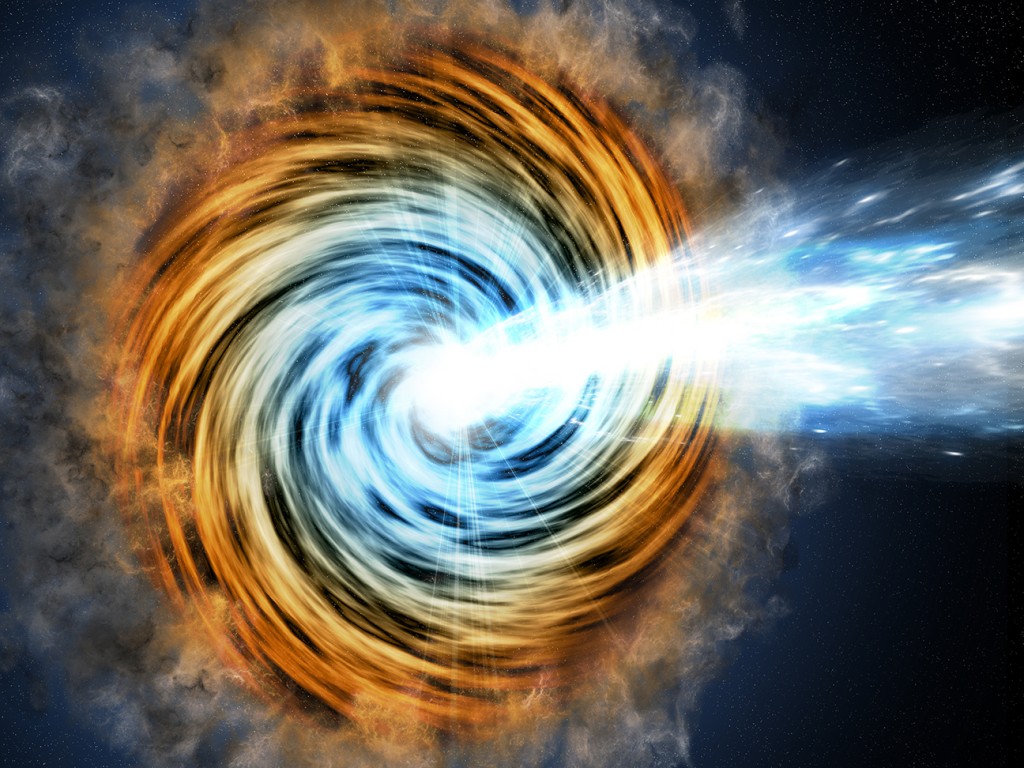
Artist’s view of a black hole-powered blazar (a type of quasar) lighting up the center of a remote galaxy.

 As matter falls toward the supermassive black hole at the galaxy’s center, some of it is accelerated outward at nearly

 the speed of light along jets pointed in opposite directions. When one of the jets happens to be aimed in the direction

 of Earth, as illustrated here, the galaxy appears especially bright and is classified as a blazar.

Credits: M. Weiss/CfA
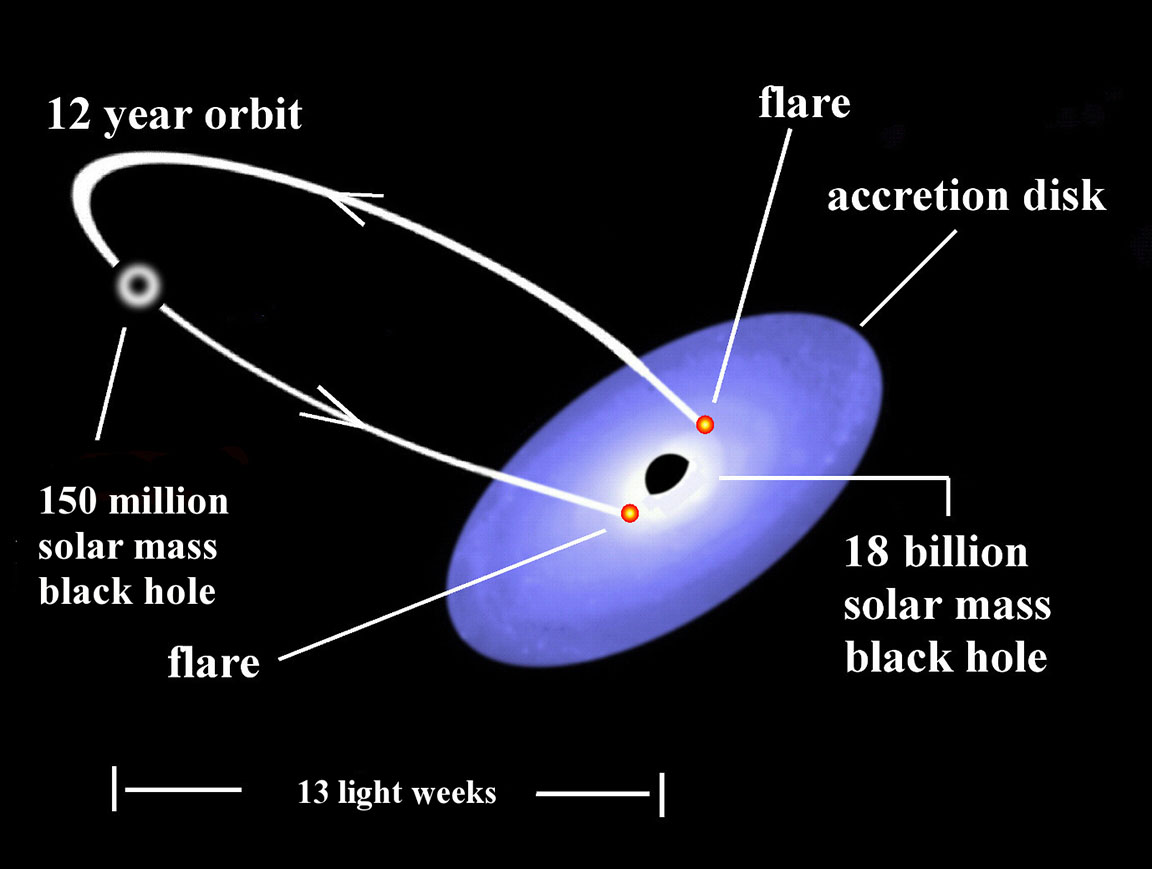
An illustration of the binary black hole system, OJ 287, showing the massive black hole surrounded by an accretion disk.

 A second, smaller black hole is believed to orbit the larger. When it intersects the larger’s disk coming and going,

 astronomers see a pair of bright flares. The predictions of the model are verified by observations.

 Credit: University of Turku
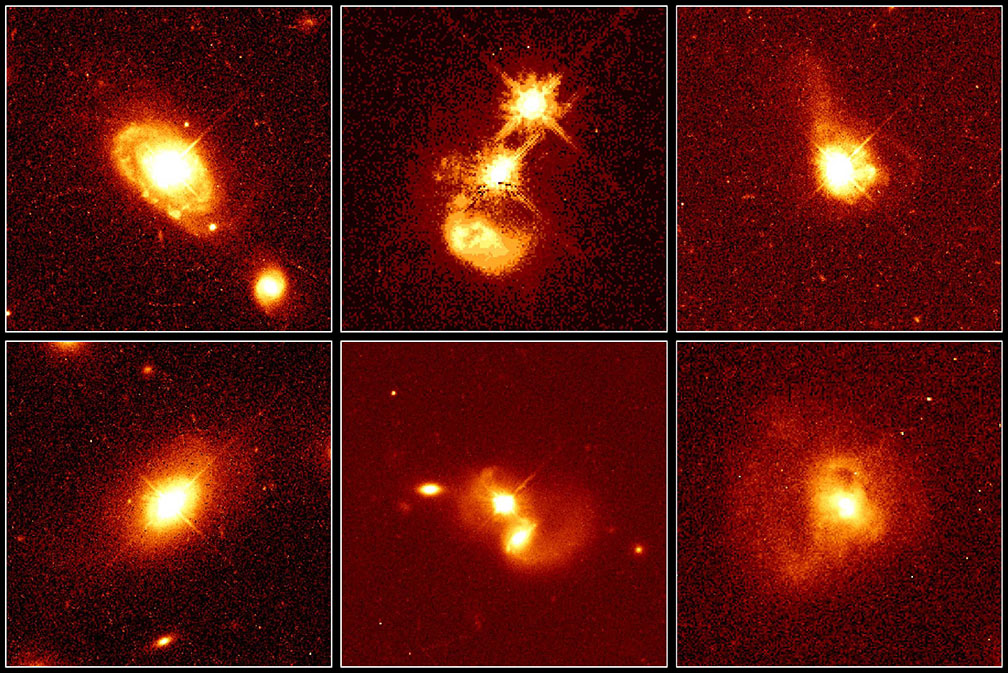
Long exposures made with the Hubble Space Telescope showing brilliant quasars flaring in the hearts of six distant galaxies.

 Credit: NASA/ESA
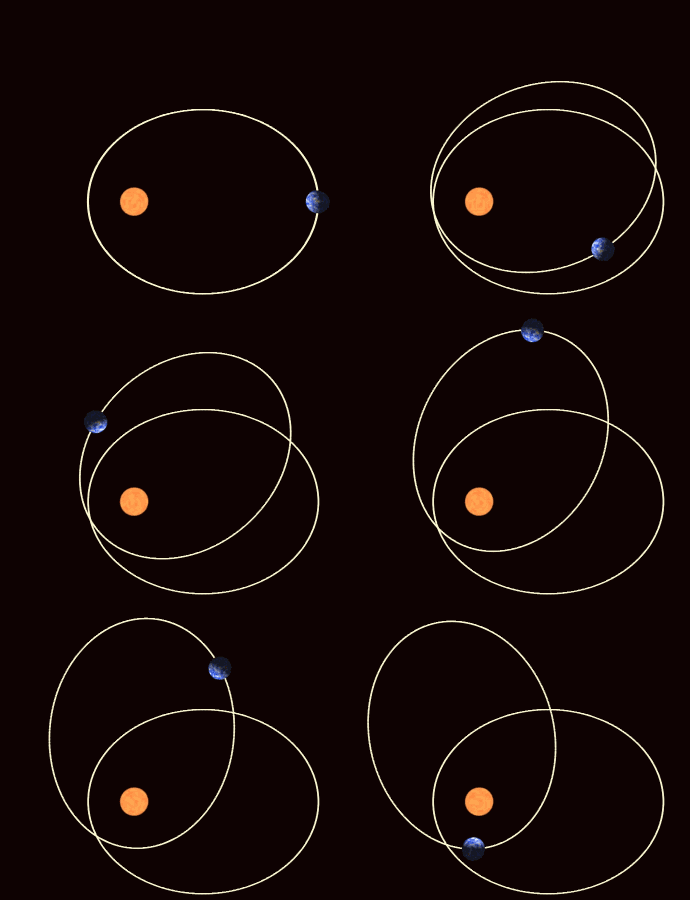
Illustration of a gradually precessing orbit similar to the precessing orbit of the smaller smaller black hole

orbiting the larger in OJ 287. Credit: Willow W / Wikipedia
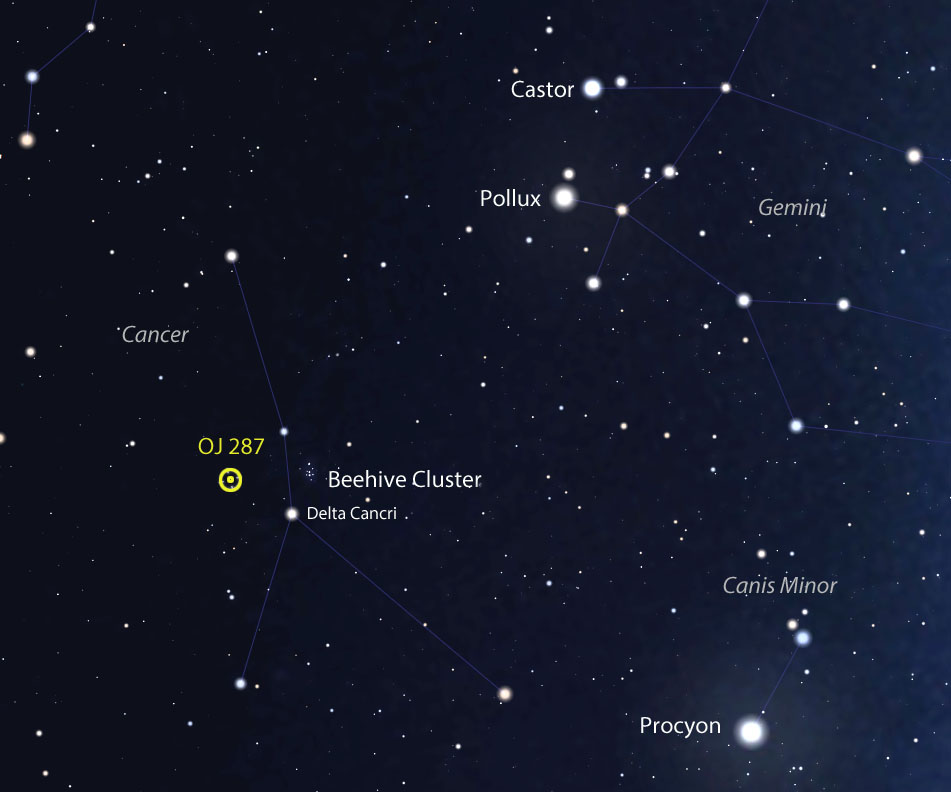
OJ 287 has been fluctuating around 13.5-140 magnitude lately. You can spot it in a 10-inch

 or larger scope in Cancer not far from the Beehive Cluster. Click the image for a detailed AAVSO finder chart.

 Diagram: Bob King, source: Stellarium
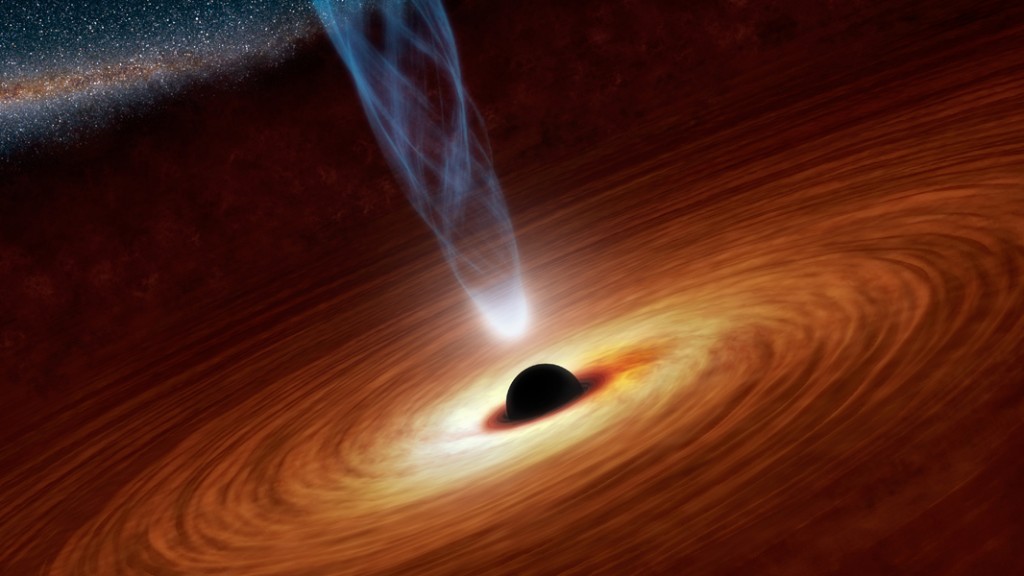
A supermassive black hole has been found in an unusual spot: an isolated region of space

 where only small, dim galaxies reside.

 Image credit: NASA/JPL-Caltech
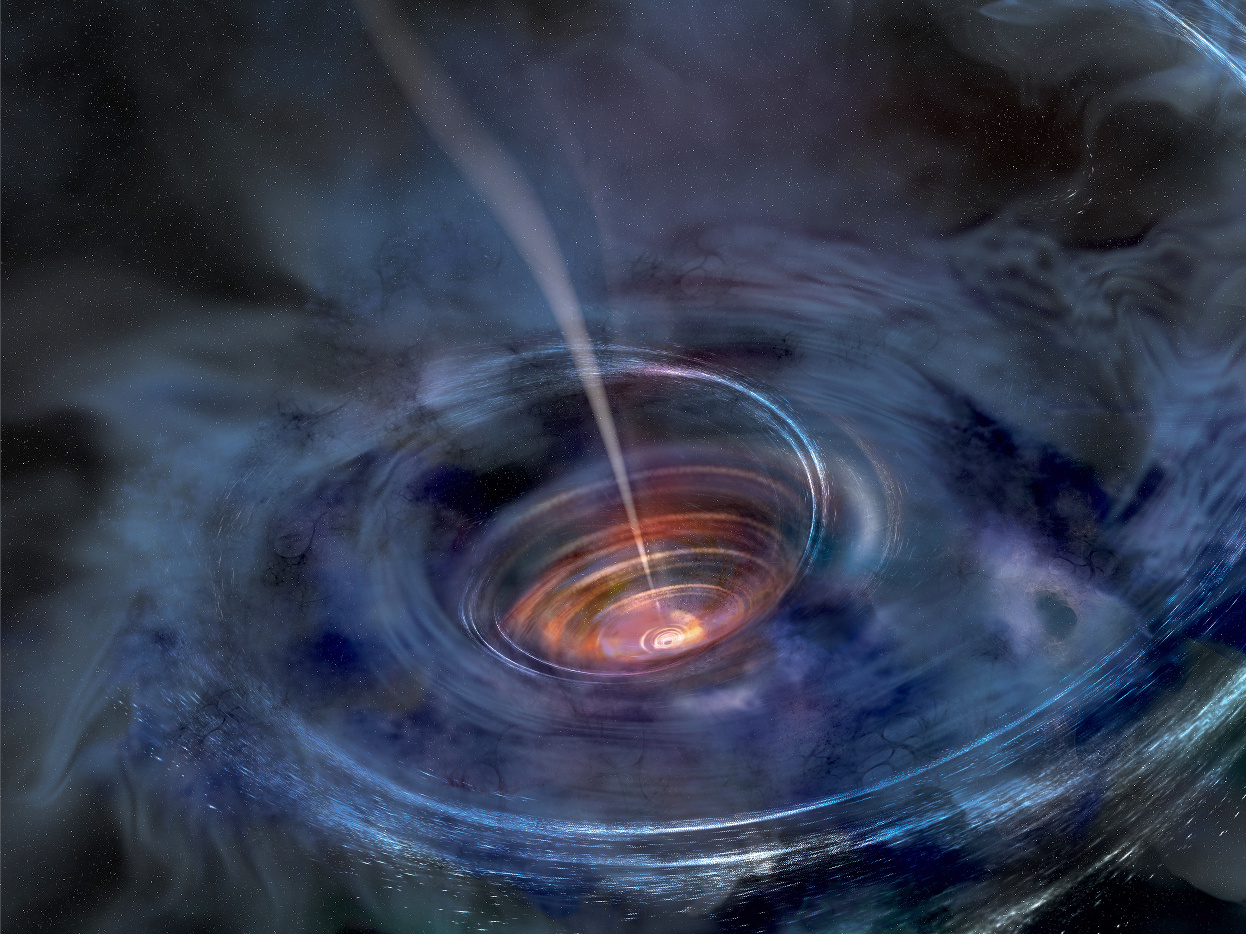
In this artist’s rendering, a thick accretion disc has formed around a supermassive black hole

following the tidal disruption of a star that wandered too close. Stellar debris has fallen toward the black hole

 and collected into a thick chaotic disc of hot gas. Flashes of X-ray light near the centre of the disc result in light echoes

 that allow astronomers to map the structure of the funnel-like flow, revealing for the first time strong gravity effects

 around a normally quiescent black hole.

 Illustration credits: NASA/Swift/Aurore Simonnet, Sonoma State University.
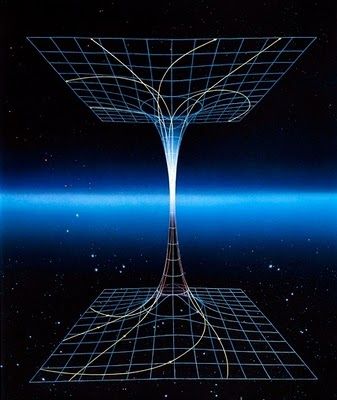
Parallel universes - Black Hole connected to a theoretical White Hole.

- If the theoretical science is correct, there are an infinite number of universes

 with same situations and different outcomes, do you believe?
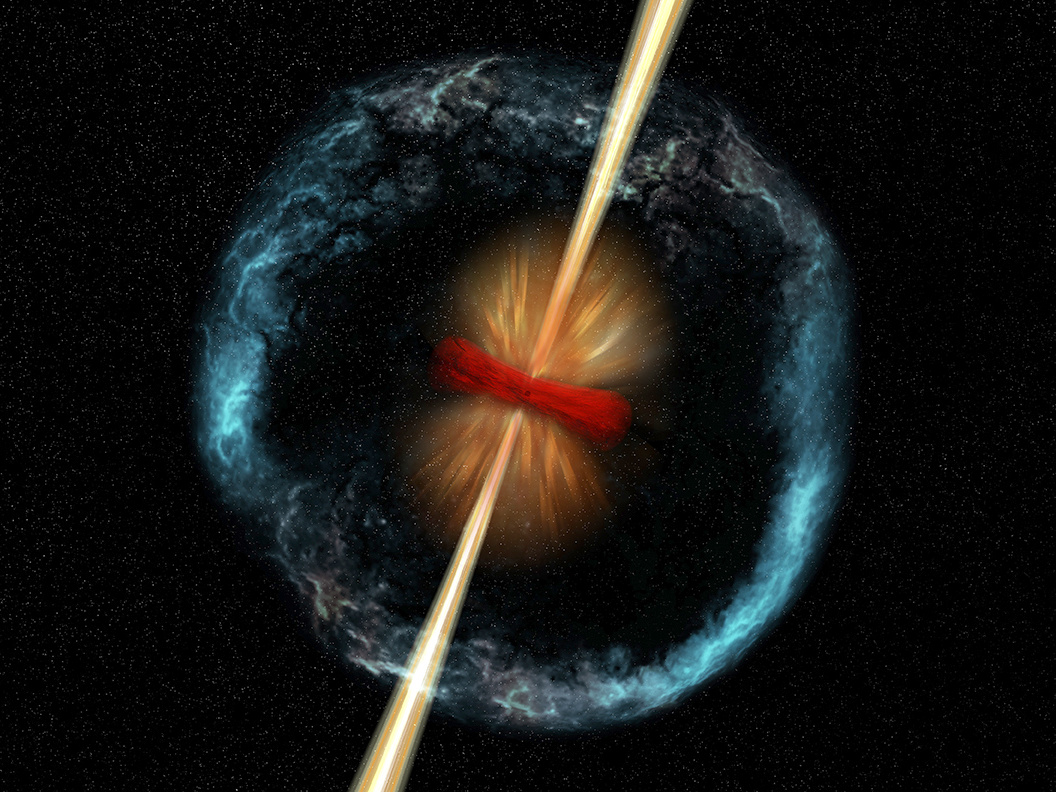
This artist’s illustration depicts the aftermath of a neutron star merger, including the generation of a Gamma-ray burst (GRB).

In the centre is a compact object — either a black hole or a massive neutron star — and in red is a disc of material

 left over from the merger, containing material falling towards the compact object. Energy from this infalling material drives the GRB

 jet shown in yellow. In orange is a wind of particles blowing away from the disc and in blue is material ejected from the compact object

 and expanding at very high speeds of about one-tenth the speed of light.

 Illustration credit: NASA/CXC/M.Weiss.
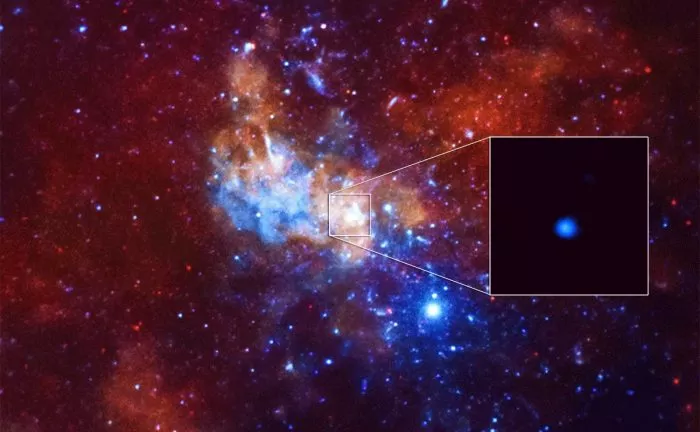
Detection of an unusually bright X-Ray flare from Sagittarius A*,
a supermassive black hole in the center of the Milky Way galaxy.
 Credit: NASA/CXC/Stanford/I. Zhuravleva et al.
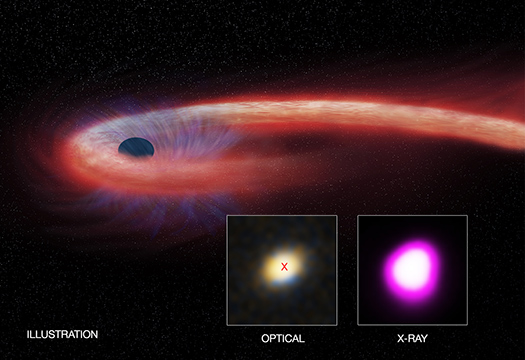
A trio of X-ray observatories has captured a decade-long eating binge by a black hole
almost two billion light years away.
 Credit: X-ray: NASA/CXC/UNH/D.Lin et al, Optical: CFHT, Illustration: NASA/CXC/M.Weiss.
Published on Feb 6, 2017
Black holes are extremely compact and dense, generating incredibly powerful gravitational forces.
When an object, like a star, wanders too close, these forces can rip that object to pieces.
Some of the material from the doomed object is hurtled out into space. The black hole devours the rest.
Astronomers just found a black hole gnawing on the remains of a star for over ten years.
This is the largest meal, or the first clean-your-plate job, for a black hole ever seen.
Category
Science & Technology
License
Standard YouTube License
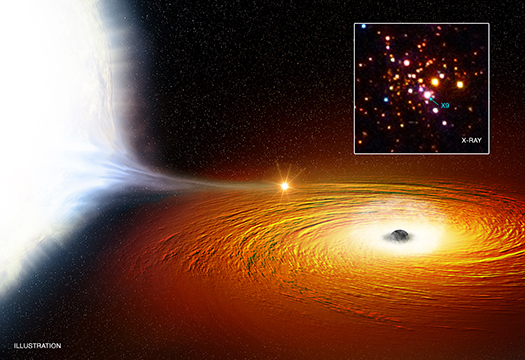
This artist's impression depicts a white dwarf star found in the closest known orbit around a black hole.
 As the circle around each other, the black hole's gravitational pull drags material from the
 white dwarf's outer layers toward it. Astronomers found that the white dwarf in X9 completes one orbit around
 the black hole in less than a half an hour. They estimate the white dwarf and black hole are separated
 by about 2.5 times the distance between the Earth and Moon — an extraordinarily small span in cosmic terms.
 (Credit: NASA/CXC/M.Weiss)
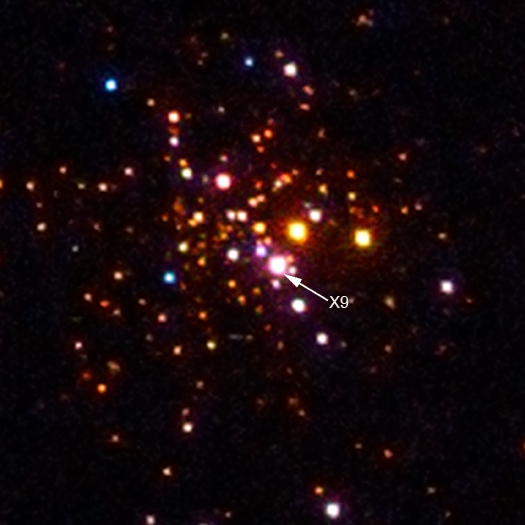
Astronomers found an extraordinarily close stellar pairing in the globular cluster 47 Tucanae,
 a dense collection of stars located on the outskirts of the Milky Way galaxy,
 about 14,800 light years from Earth. Credit: X-ray:
 NASA/CXC/University of Alberta/A.Bahramian et al.
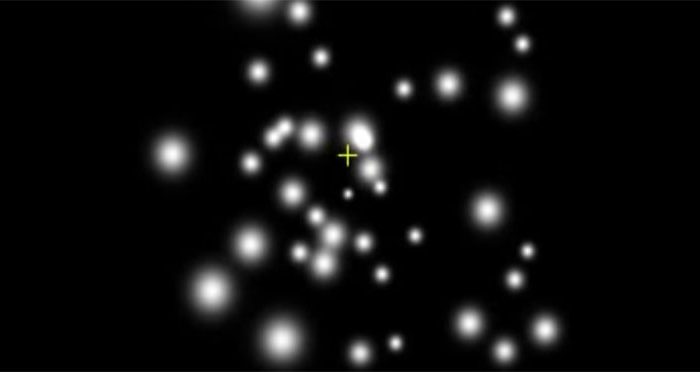
Stars circle 'round the Milky Way central supermassive black hole. Credit: ESO
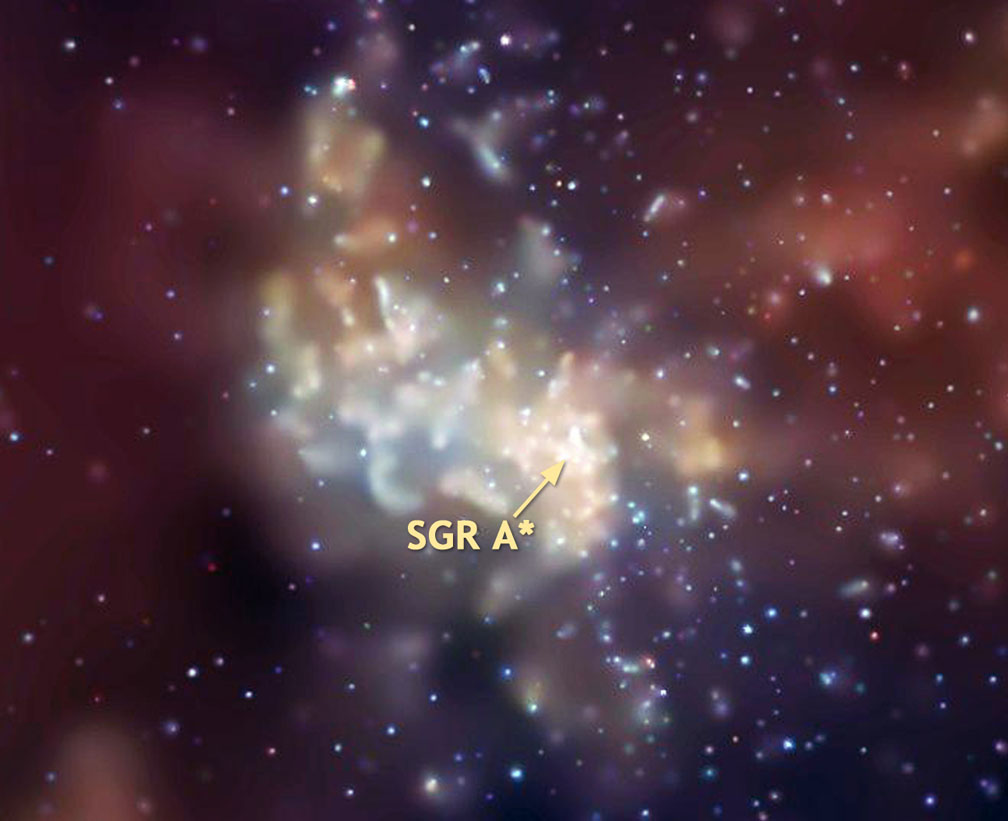
The Milky Way’s supermassive black hole, called Sagittarius A* (or Sgr A*),
is arrowed in the image made of the innermost galactic center in X-ray light by NASA’s Chandra Observatory.
To the left or east of Sgr A* is Sgr A East, a large cloud that may be the remnant of a supernova.
Centered on Sgr A* is a spiral shaped group of gas streamers that might be falling onto the hole.
 Credit: NASA/CXC/MIT/Frederick K. Baganoff et al.
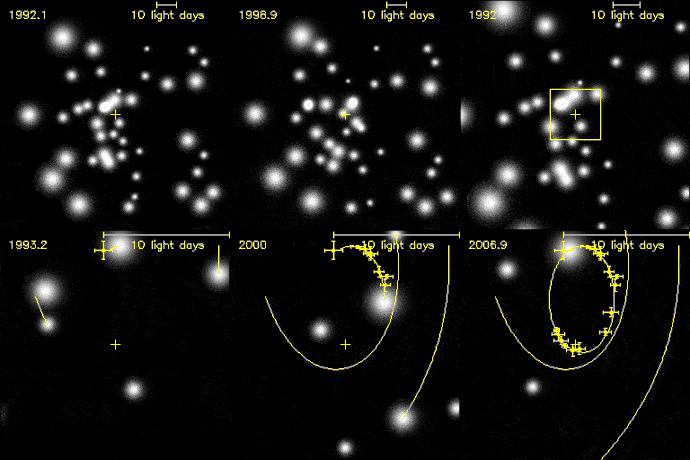
This time-lapse movie in infrared light shows how stars in the central light-year of the Milky Way
 have moved over a period of 14 years. The yellow mark at the image center represents the location of Sgr A*,
 site of an unseen supermassive black hole.
Credit: A. Eckart (U. Koeln) & R. Genzel (MPE-Garching), SHARP I, NTT, La Silla Obs., ESO
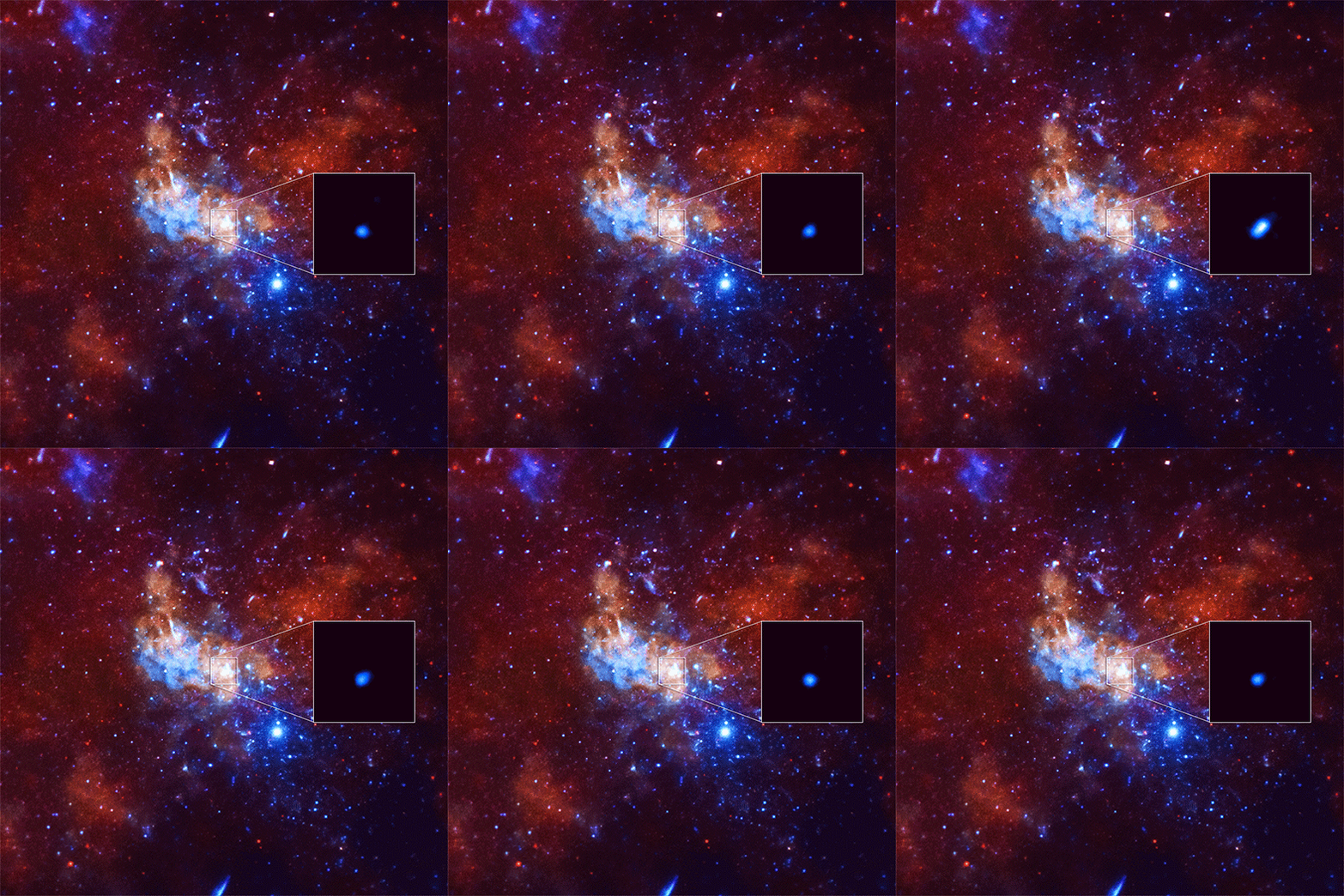
On September 14, 2013, astronomers caught the largest X-ray flare ever detected from Sgr A*,
 the supermassive black hole at the center of the Milky Way, using NASA’s Chandra X-ray Observatory.
 This event was 400 times brighter than the usual X-ray output from the source and was possibly caused
 when Sgr A*’s strong gravity tore apart an asteroid in its neighborhood, heating the debris to X-ray-emitting
 temperatures before slurping down the remains.The inset shows the giant flare.
 Credit: NASA
Published on Oct 20, 2012
An international team of astronomers, lead by researchers at the Max-Planck Institute for Extraterrestrial Physics (MPE),
 has directly observed an otherwise normal star orbiting the supermassive black hole at the center of the Milky Way Galaxy.
Ten years of painstaking measurements have been crowned by a series of unique images obtained by the Adaptive Optics (AO)
 NAOS-CONICA (NACO) instrument on the 8.2-m VLT YEPUN telescope at the ESO Paranal Observatory.
 It turns out that earlier this year the star approached the central Black Hole to within 17 light-hours
 - only three times the distance between the Sun and planet Pluto - while travelling at no less than 5000 km/sec .
In a break-through paper appearing in the research journal Nature on October 17th, 2002, the present team reports
 their exciting results, including high-resolution images that allow tracing two-thirds of the orbit of a star designated "S2" .
 It is currently the closest observable star to the compact radio source and massive black hole candidate "SgrA*" ("Sagittarius A")
 at the very center of the Milky Way. The orbital period is just over 15 years.
The new measurements exclude with high confidence that the central dark mass consists of a cluster of unusual stars or elementary particles,
 and leave little doubt of the presence of a supermassive black hole at the centre of the galaxy in which we live .
ESO Press Video eso0226 was produced by the Max-Planck-Society and shows the observed motions of S2 and other stars in this area.

Credit: ESO
Category
Science & Technology
License
Standard YouTube License
Published on Feb 11, 2016
A computer simulation shows the collision of two black holes, a tremendously powerful event detected for the first time
ever by the Laser Interferometer Gravitational-Wave Observatory, or LIGO. LIGO detected gravitational waves,
 or ripples in space and time generated as the black holes spiraled in toward each other, collided, and merged.
 This simulation shows how the merger would appear to our eyes if we could somehow travel in a spaceship for a closer look.
 It was created by solving equations from Albert Einstein's general theory of relativity using the LIGO data.
The two merging black holes are each roughly 30 times the mass of the sun, with one slightly larger than the other.
 Time has been slowed down by a factor of about 100. The event took place 1.3 billion years ago.
The stars appear warped due to the incredibly strong gravity of the black holes. The black holes warp space and time,
 and this causes light from the stars to curve around the black holes in a process called gravitational lensing.
 The ring around the black holes, known as an Einstein ring, arises from the light of all the stars in a small region behind the holes,
 where gravitational lensing has smeared their images into a ring.
The gravitational waves themselves would not be seen by a human near the black holes and so do not show in this video,
 with one important exception. The gravitational waves that are traveling outward toward the small region behind the black holes
 disturb that region’s stellar images in the Einstein ring, causing them to slosh around, even long after the collision.
 The gravitational waves traveling in other directions cause weaker, and shorter-lived sloshing, everywhere outside the ring.
This simulation was created by the multi-university SXS (Simulating eXtreme Spacetimes) project.
   For more information, visit
Image credit: SXS
Category
Science & Technology
License
Creative Commons Attribution license (reuse allowed)
Source videos
View attributionse
ON SEPT. 14, 2015, at almost the exact same time that a pair of sprawling gravitational-wave
detectors heard the last gasp of a collision between two black holes, another,
more perplexing observation took place. Over 500 kilometers above the surface of the Earth,
the orbiting Fermi Gamma-Ray Space Telescope logged a passing burst of gamma rays,
 a high-energy form of light. The signal was so slight that the NASA scientists
 who run the satellite didn’t notice it at first.
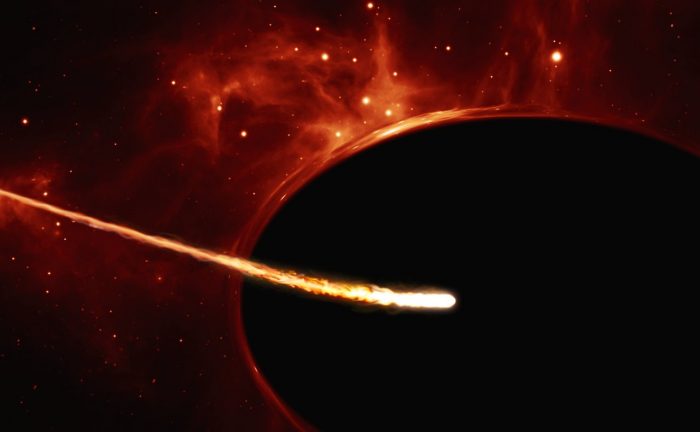
Close-up of star near a supermassive black hole (artist’s impression).
Credit: ESA/Hubble, ESO, M. Kornmesser
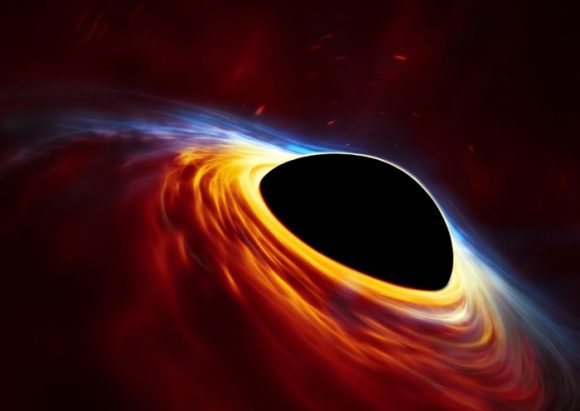
This artist’s impression depicts a rapidly spinning supermassive black hole surrounded by an accretion disc.
 Credit: ESA/Hubble, ESO, M. Kornmesse
This animation shows how the ASASSN-15lh most likely happened. A Sun-like star gets into the area of influence
of a rapidly spinning supermassive black hole in the centre of a distant galaxy. While its orbit gets constantly closer
 to the black hole the star gets “spaghettified”, creating an accretion disc around the supermassive black hole.
 When it finally gets ripped apart close to the event horizon it creates a bright flash, that could resemble a superluminous supernova.

More information and download options for this video


ESA's Video dierectory page

Credit:
ESA/Hubble, ESO, M. Kornmesser
Category
Science & Technology
License
Standard YouTube License
This simulation shows a star getting torn apart by the gravitational tides of a supermassive black hole. The star gets “spaghettified” and after several orbits creates an accretion disc. Scientists believe that the superluminous ASASSN-15lh event happened like that.

More information and download options for this video


ESA's Video dierectory page
Credit:
ESA/Hubble, ESO, N. Stone, K. Hayasaki
Category
Science & Technology
License
Standard YouTube License
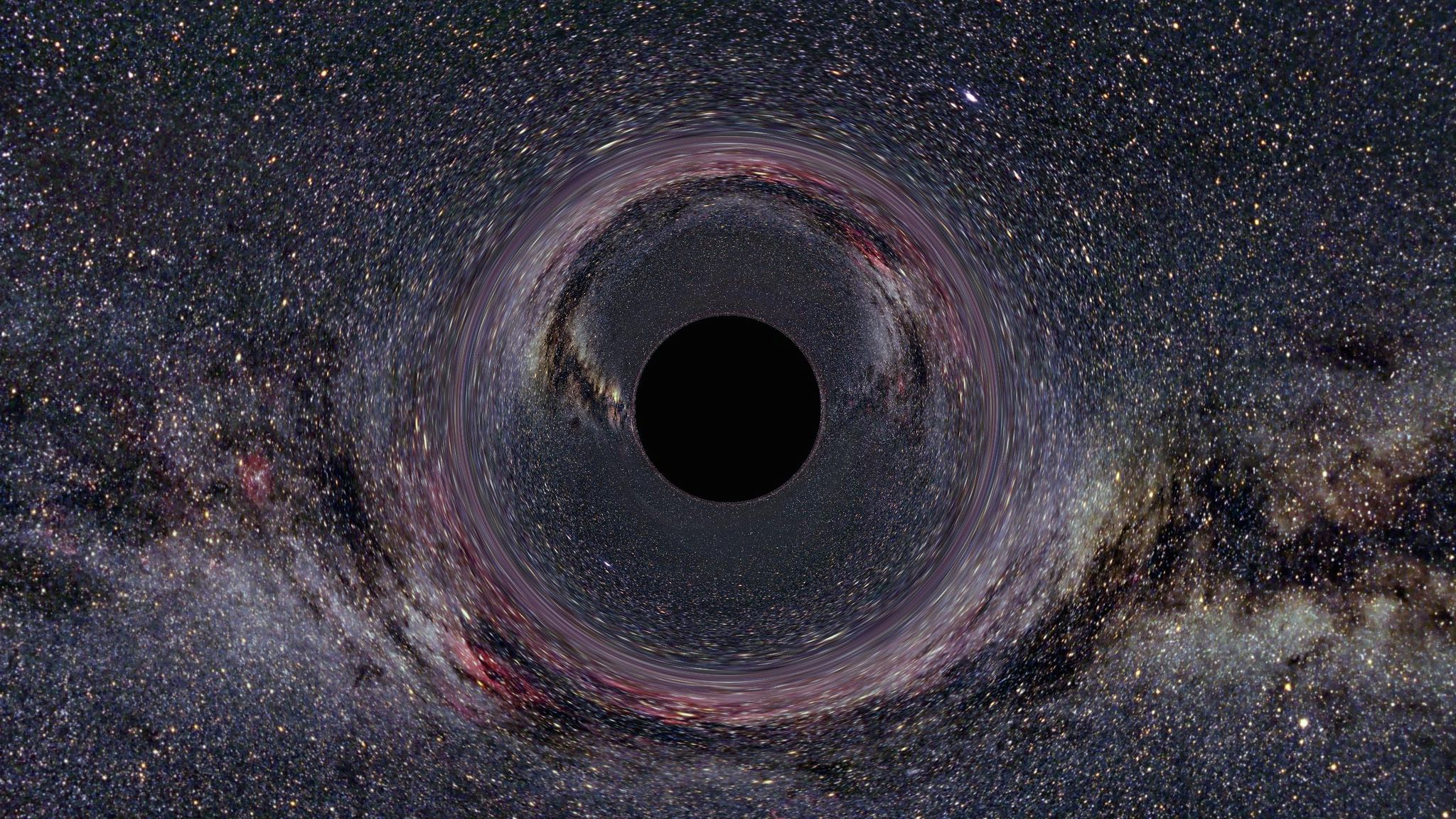
While black holes with masses of a few suns and ones with masses of millions of suns exist,
 scientists have been puzzled to see few with masses in between those two extremes.
 New work may suggest a reason why.
Credit: Ute Kraus/Wikipedia, CC BY-SA

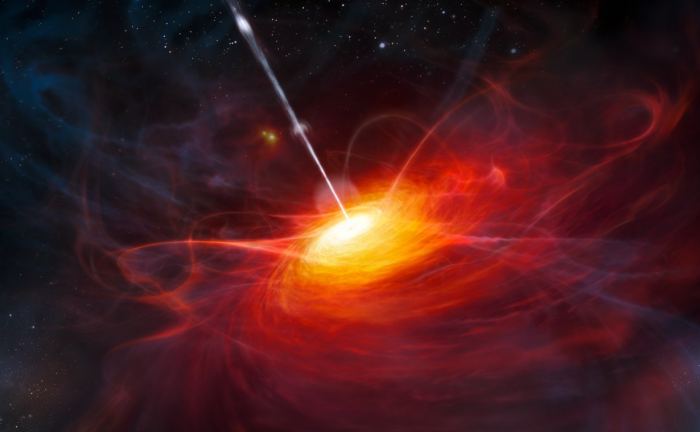
Artist’s impression of ULAS J1120+0641, a very distant quasar powered by a black hole with a mass two billion times that of the Sun.
 Credit: ESO/M. Kornmesser
 Ever since the discovery of Sagittarius A* at the center of our galaxy, astronomers have come to understand
 that most massive galaxies have a Supermassive Black Hole (SMBH) at their core. These are evidenced by the
 powerful electromagnetic emissions produced at the nuclei of these galaxies – which are known as “Active Galatic Nuclei” (AGN)
 – that are believed to be caused by gas and dust accreting onto the SMBH.
For decades, astronomers have been studying the light coming from AGNs to determine how large and massive their black holes are.
 This has been difficult, since this light is subject to the Doppler effect, which causes its spectral lines to broaden.
 But thanks to a new model developed by researchers from China and the US, astronomers may be able to study these
 Broad Line Regions (BLRs) and make more accurate estimates about the mass of black holes.
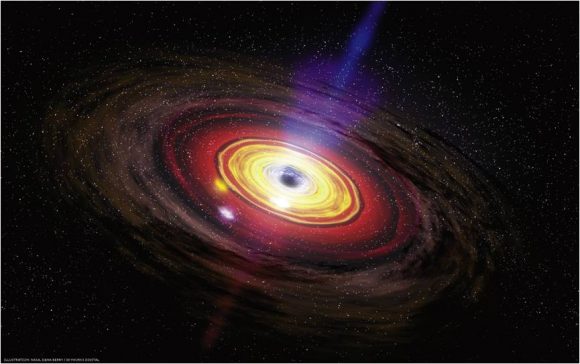
An artist’s impression of the accretion disc around the supermassive black hole that powers an active galaxy.
 Credit: NASA/Dana Berry, SkyWorks Digital
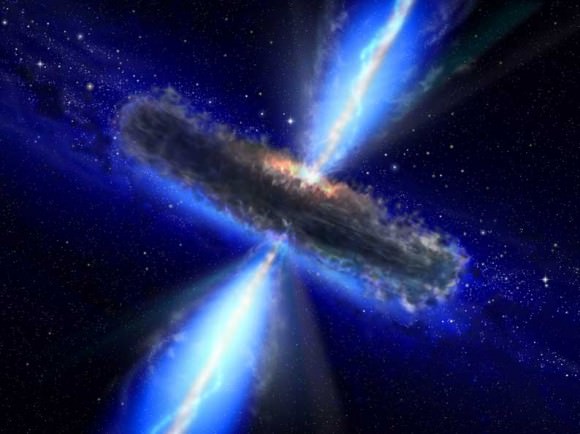
Dense clouds of dust and gas, illustrated here, can obscure less energetic radiation
from an active galaxy’s central black hole. High-energy X-rays, however, easily pass through.
Credit: ESA/NASA/AVO/Paolo Padovani
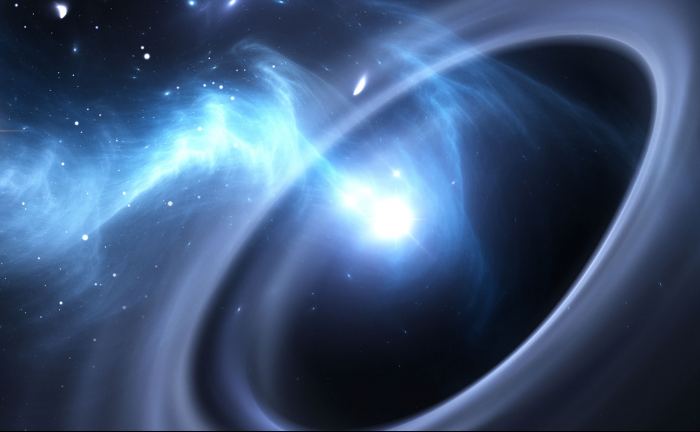
Artist's impression of the relativistic jet emanating from a black hole. Credit:
 Northwestern University
See model W-HR in
Movie shows the data of 7,400 - 31,000 t_g. Unfortunately, the data of the first 0-7,400 t_g was corrupted due to output error.
The accretion disc is initially turned slightly to the left and towards the viewer (black hole spin is pointing vertical in the movie).
 We see how the relativistic jets are launched (greatly disturbing the accretion disc) and how they point along the rotation axis of the disc
 (slightly to the left and towards the viewer), and not along the black hole spin.
Over time, we see how the jets and disc change direction together, moving slightly to the right and aligning slightly with the black hole.
 Together, the disc and jets precess around the black hole spin about 40 degrees over the entire simulation.
 Precession of the accretion disc was predicted by Lense and Thirring in 1918 (and confirmed in previous work).
 Here, we present the first simulation ever to demonstrate that jets follow along with the precession of the accretion disc.
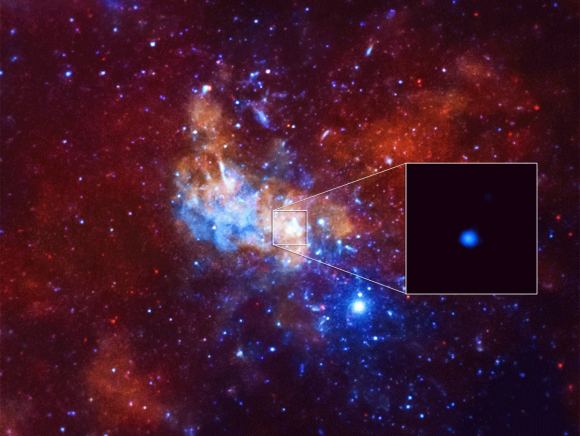
Detection of an unusually bright X-Ray flare from Sagittarius A*, a supermassive black hole in the center of the Milky Way galaxy.
Credit: NASA/CXC/Stanford/I. Zhuravleva et al.
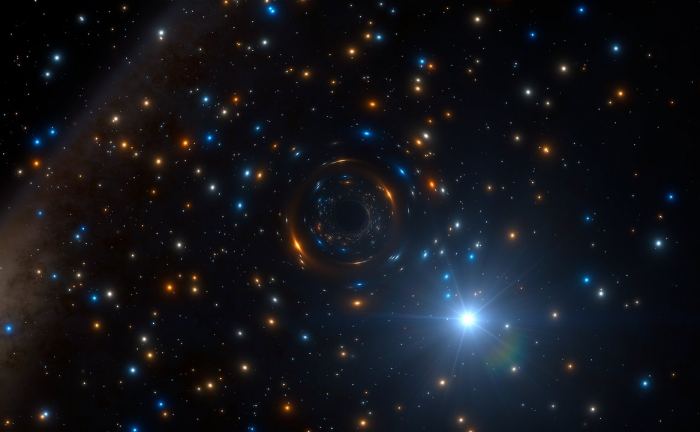
Artist's impression of the star cluster NGC 3201 orbiting an black hole with about four times the mass of the Sun.
 Credit: ESO/L. Calçada
Astronomers using ESO’s MUSE instrument on the Very Large Telescope in Chile have discovered
a star in the cluster NGC 3201 that is behaving very strangely. It appears to be orbiting an invisible black hole
with about four times the mass of the Sun — the first such inactive stellar-mass black hole found in a globular cluster.
 This important discovery impacts on our understanding of the formation of these star clusters, black holes,
 and the origins of gravitational wave events.
This artist’s impression shows how the star and its massive but invisible black hole companion may look,
 as they orbit each other in the rich heart of the globular star cluster.

 More information and download options:

Credit:
ESO/L. Calçada/spaceengine.org
Astronomers using ESO’s MUSE instrument on the Very Large Telescope in Chile have discovered a star
 in the cluster NGC 3201 that is behaving very strangely. It appears to be orbiting an invisible black hole
 with about four times the mass of the Sun — the first such inactive stellar-mass black hole found in a globular cluster.
 This important discovery impacts on our understanding of the formation of these star clusters, black holes,
 and the origins of gravitational wave events.
This artist’s impression shows how the star and its massive but invisible black hole companion may look,
 as they orbit each other in the rich heart of the globular star cluster.

More information and download options:

Credit:
ESO/L. Calçada/spaceengine.org
Astronomers using ESO’s MUSE instrument on the Very Large Telescope in Chile have discovered a star
 in the cluster NGC 3201 that is behaving very strangely. It appears to be orbiting an invisible black hole
 with about four times the mass of the Sun — the first such inactive stellar-mass black hole found in a globular cluster.
This important discovery impacts on our understanding of the formation of these star clusters, black holes,
 and the origins of gravitational wave events.
This short ESOcast takes a look at this discovery and its significance.
The video is available in 4K UHD.
The ESOcast Light is a series of short videos bringing you the wonders of the Universe in bite-sized pieces.
The ESOcast Light episodes will not be replacing the standard, longer ESOcasts,
 but complement them with current astronomy news and images in ESO press releases.

 More information and download options:

 Subscribe to ESOcast in iTunes!

 Receive future episodes on YouTube by pressing the Subscribe button above or follow us on Vimeo:

 Watch more ESOcast episodes:

:Find out how to view and contribute subtitles for the ESOcast in multiple languages, or translate this video on YouTube

Credit:
ESO.
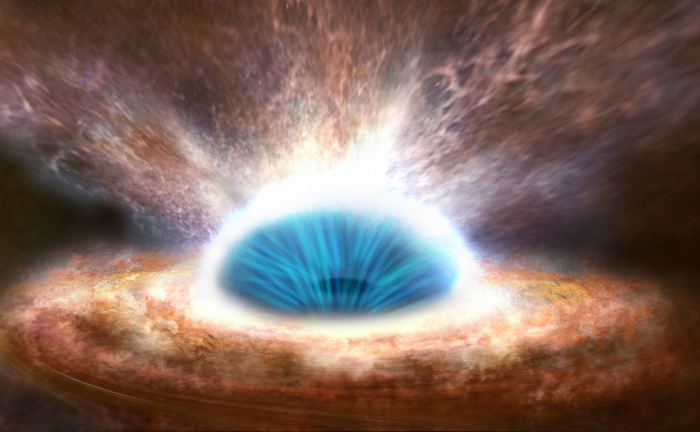
Artist's impression of the black hole wind at the center of a galaxy. Credit: ESA
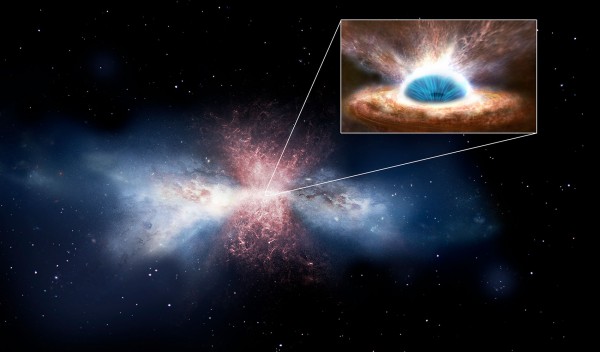
Artist’s impression of a black hole’s wind sweeping away galactic gas. Credit: ESA
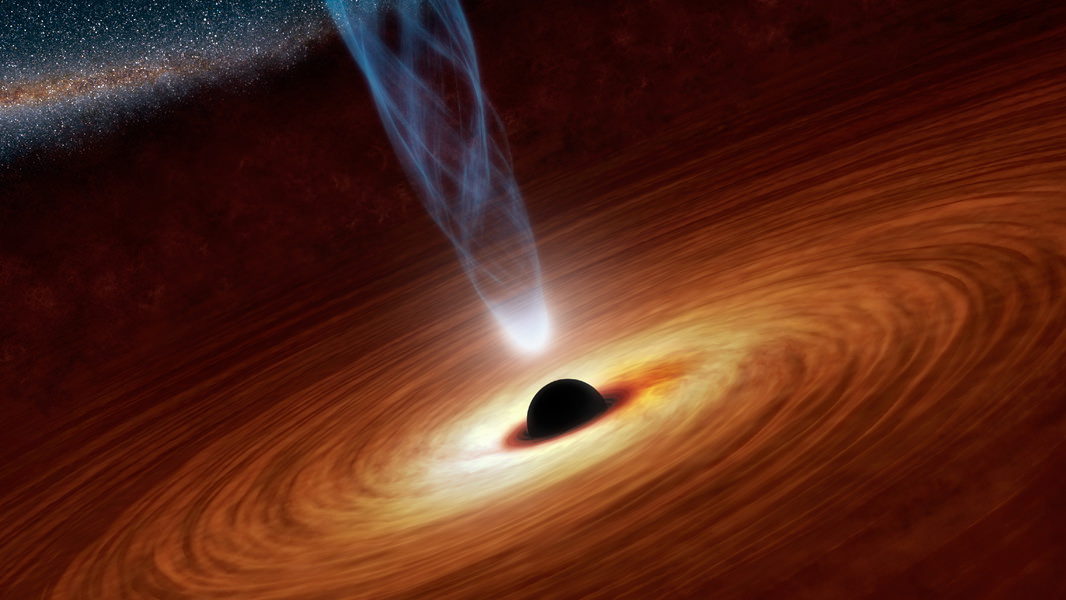
Artist’s concept of Sagittarius A, the supermassive black hole at the center of our galaxy.
 Credit: NASA/JPL
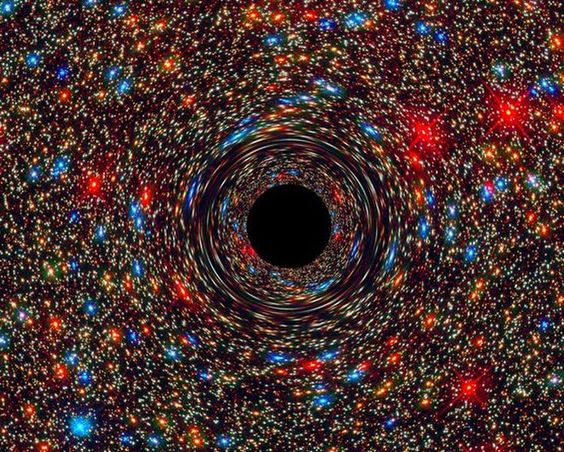
Visualization of a black hole.
Credit: D. Coe, J. Anderson, and R. van der Marel (STScI)/NASA/ESA
On April Fools' Day in 1988, a modern science classic by world-renowned theoretical physicist
 and cosmologist Stephen Hawking was published. Called "A Brief History of Time,"
 it set off a wave of public curiosity about humanity's place in the universe.
In 2005 scientists discovered a huge energy burst which occurred 150 million light-years away from Earth
inside a galaxy named 'Arp-299'.
They thought it's a supernova explosion but it was't. In 2011, scientists discovered that the energy burst
is elongating which makes it a jet of energy coming from unknown source.
2 months ago in 2018, research showed it was actually a Black Hole 20 million times more massive than sun eating a star.
For the very first time, NASA recently captured the first ever image of a Black Hole. Watch Black Hole

Image:


Black Holes are known to swallow everything coming in their path but that's not the end.
 With time they they emit enormous amounts of energy.
In 2015 Hubble Telescope captured something that shocked the entire world.
 It was a burst of plasma jet 260 million light years away in space coming from an unknown source.
 Calculations showed that the jet was travelling at 98% the speed of light.
Scientists finally concluded that they have captured a plasma burst coming from a super-massive Black Hole. Which is located inside a galaxy 260 million light-years away.
 Join me on instagram

 Source NASA

Darkest Child A by Kevin MacLeod, License
 Artist: